

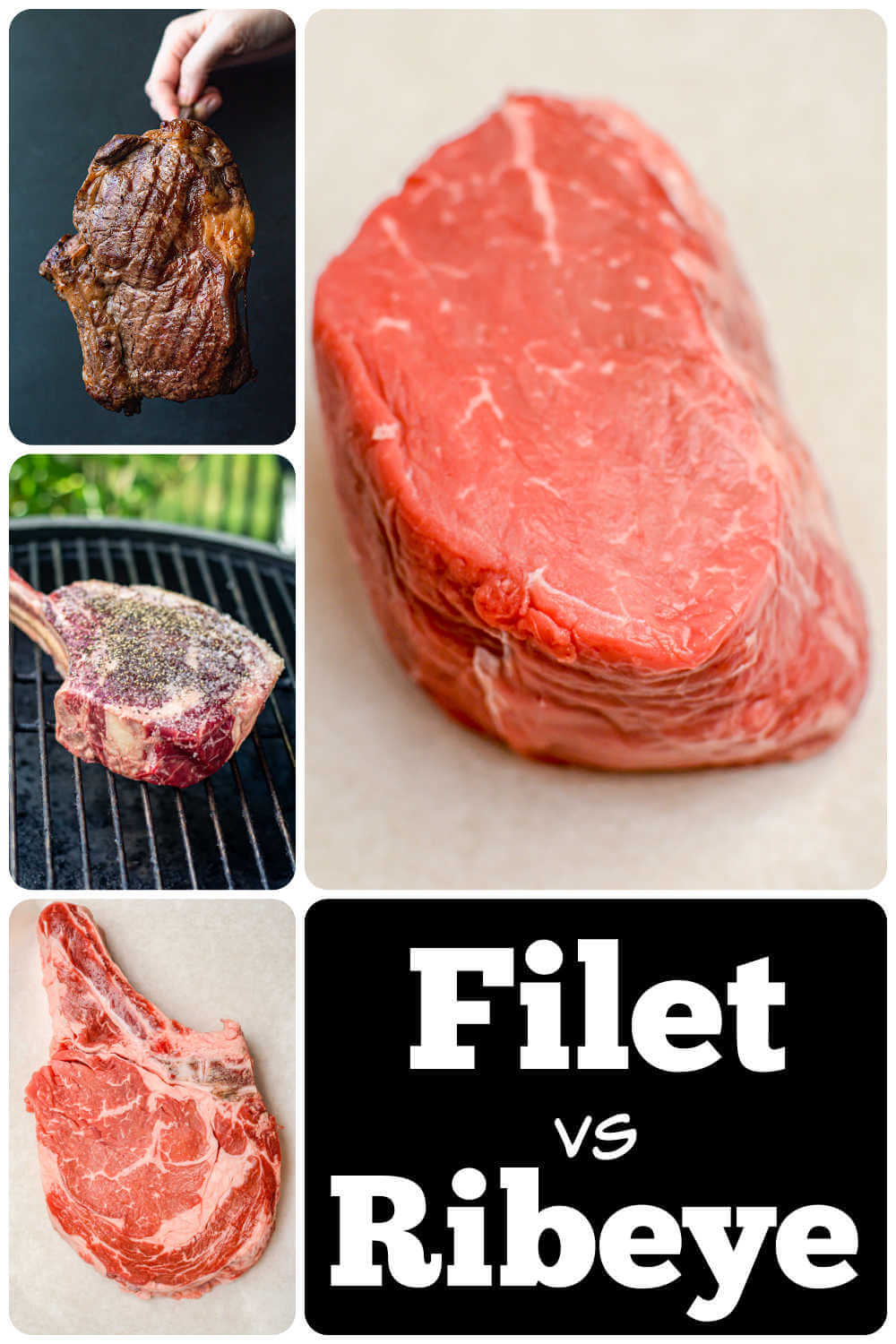
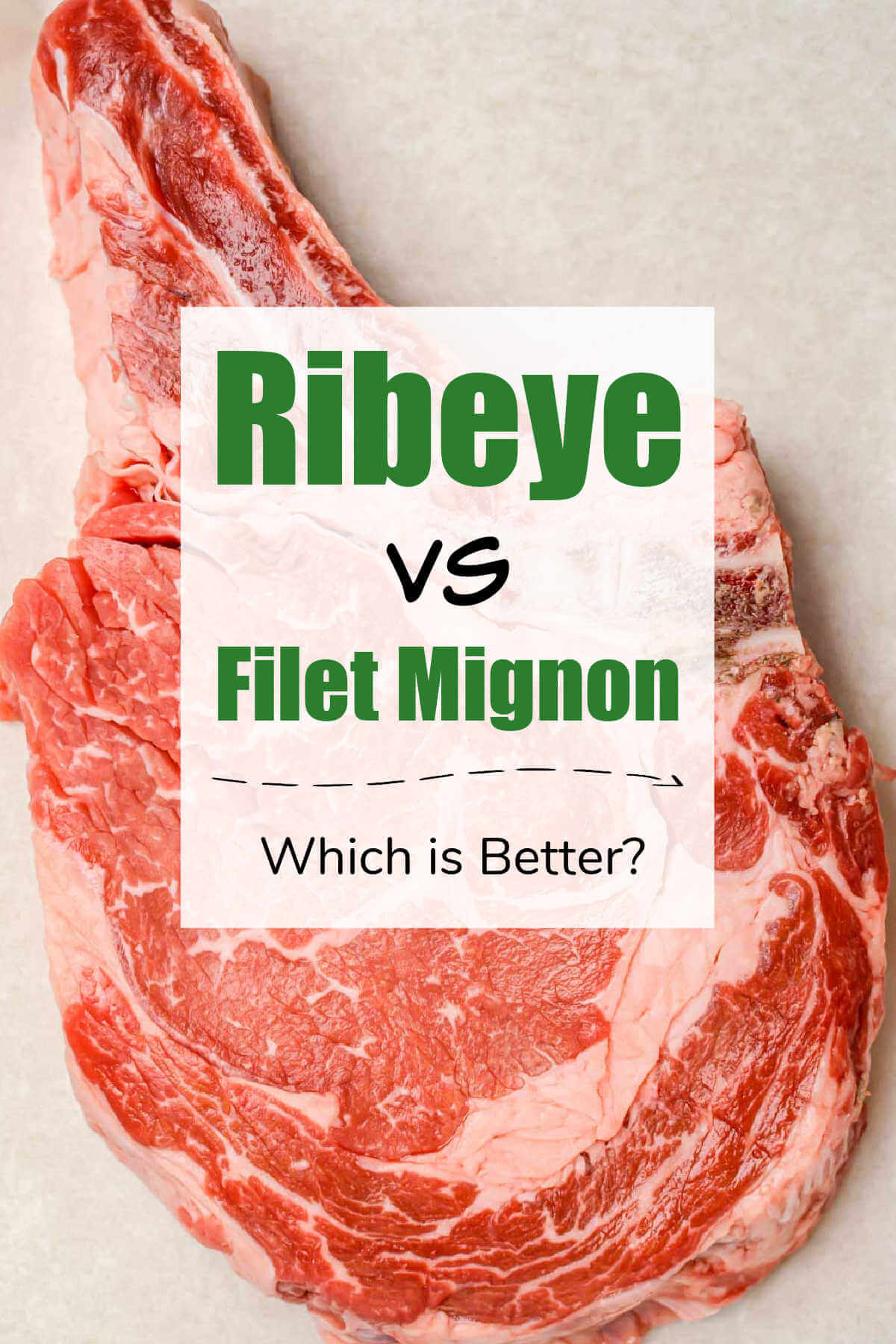
You know you want to serve steak for dinner, but you just aren’t sure which type of steak would work best? When choosing between a thick slice of filet mignon vs ribeye, you may want to consider factors such as cost, flavor, texture, and cooking methods. We are laying out a direct comparison of the two beef cuts to help you make a decision.
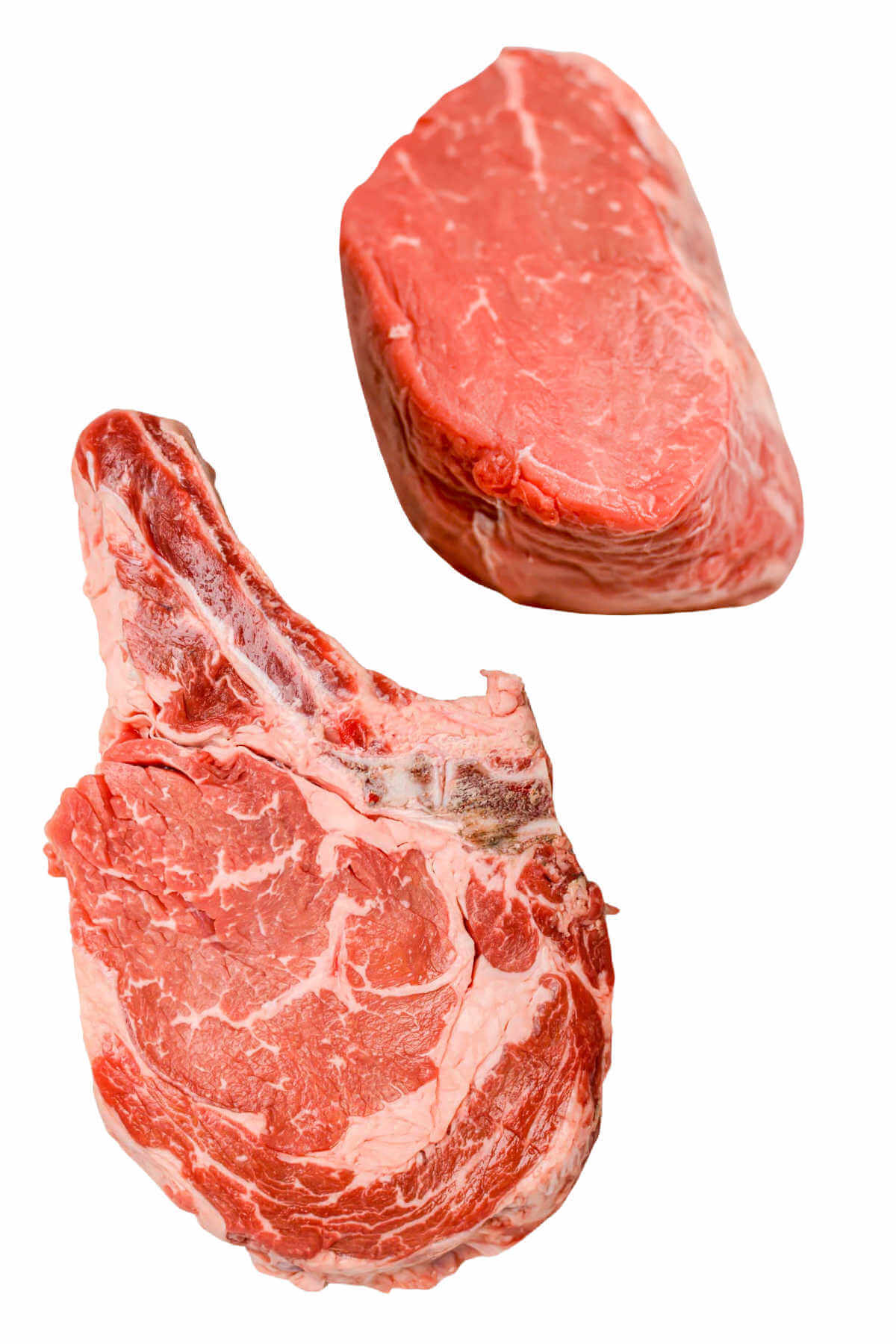
Differences Overview
| Attribute | Filet Mignon | Ribeye |
|---|---|---|
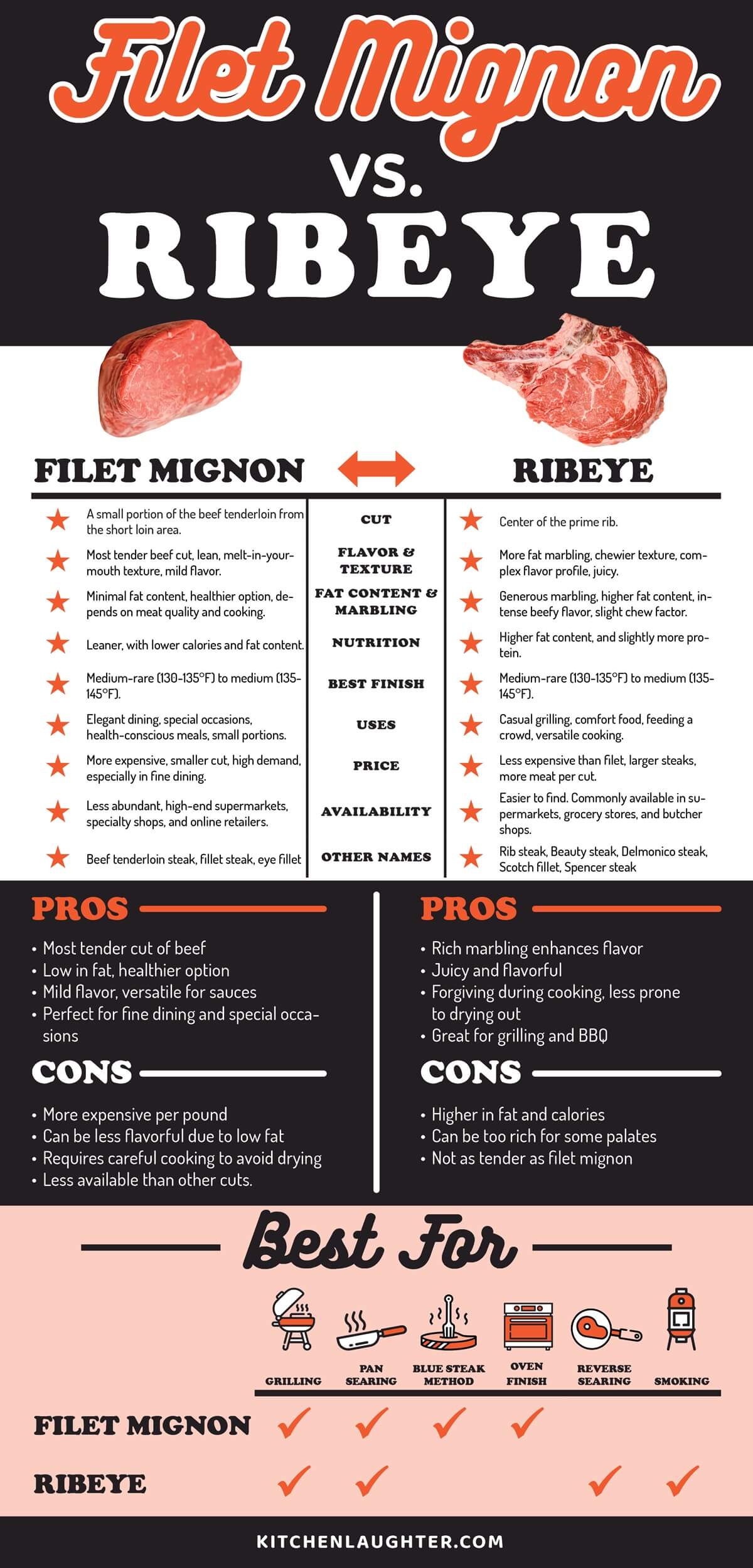
| Cut | A small portion of the beef tenderloin from the short loin area. | Center of the prime rib. |
| Flavor & Texture | Most tender beef cut, lean, melt-in-your-mouth texture, mild flavor. | More fat marbling, chewier texture, complex flavor profile, juicy. |
| Fat Content & Marbling | Minimal fat content, healthier option, depends on meat quality and cooking. | Generous marbling, higher fat content, intense beefy flavor, slight chew factor. |
| Nutrition | Leaner, with lower calories and fat content. | Higher fat content, and slightly more protein. |
| Cooking Methods | Pan-searing, blue steak method, grilling, oven finish. | Grilling, reverse searing, smoking, pan-searing. |
| Best Finish | Medium-rare (130-135°F) to medium (135-145°F). | Medium-rare (130-135°F) to medium (135-145°F). |
| Uses | Elegant dining, special occasions, health-conscious meals, small portions. | Casual grilling, comfort food, feeding a crowd, versatile cooking. |
| Price | More expensive, smaller cut, high demand, especially in fine dining. | Less expensive than filet, larger steaks, more meat per cut. |
| Availability | Less abundant, high-end supermarkets, specialty shops, and online retailers. | Easier to find. Commonly available in supermarkets, grocery stores, and butcher shops. |
| Other Names | Beef tenderloin steak, fillet steak, eye fillet | Rib steak, Beauty steak, Delmonico steak, Scotch fillet, Spencer steak |
🥩What is Filet Mignon?
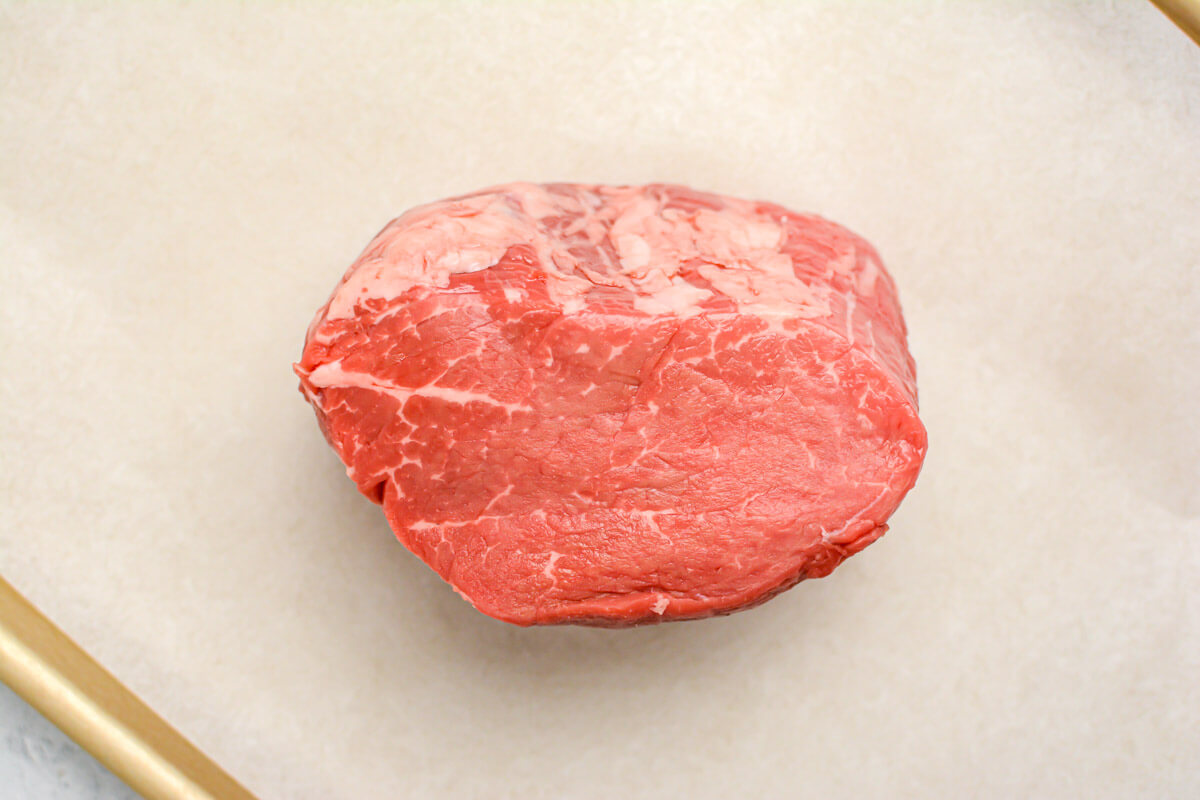
This cut of beef comes from the short loin area of the tenderloin. The filet mignon steaks are boneless and thick. What sets these steaks apart is the texture which is literally the most tender steak, most consistently textured beef you can buy.
This is the meat most often described as melt-in-your-mouth and buttery because the texture is beautiful.
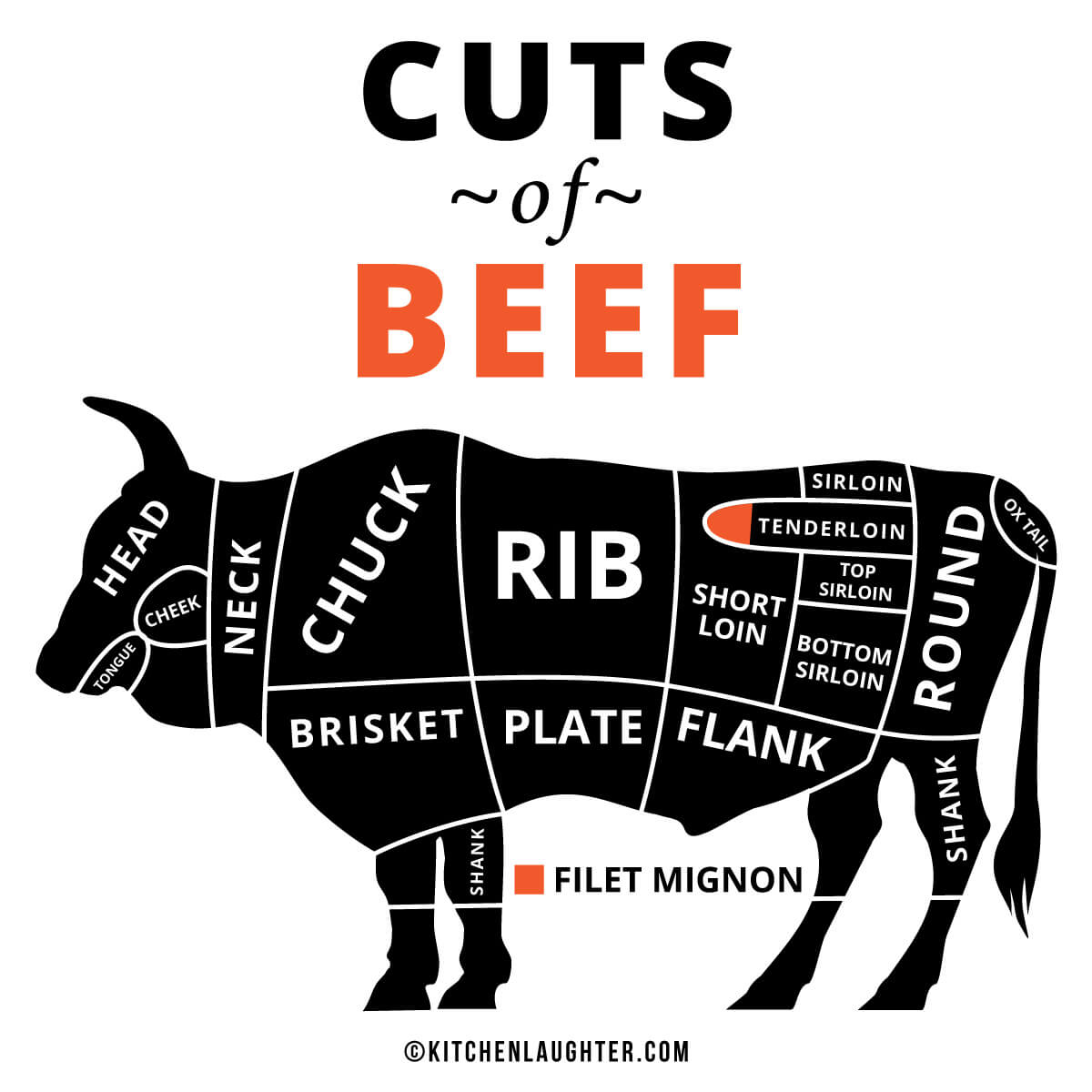
Filet means “strip”. Mignon is French for “dainty.” Only a very small amount of Filet Mignon is found on each cow, making it a rare and expensive cut. This particular muscle of the cow is hardly used at all, which is why it is so incredibly tender.
However, the flavor of Filet Mignon is lacking in intensity because there is very little fat or connective tissue to render. This is why you will often see the meat served with gravy, aus jus, or some other sauce when it is served at restaurants.
Expect that this will be the most expensive cut of beef. We often do the comparison of Tenderloin vs Filet Mignon as they are both tender and succulent cuts of beef.
🍖What is Ribeye?
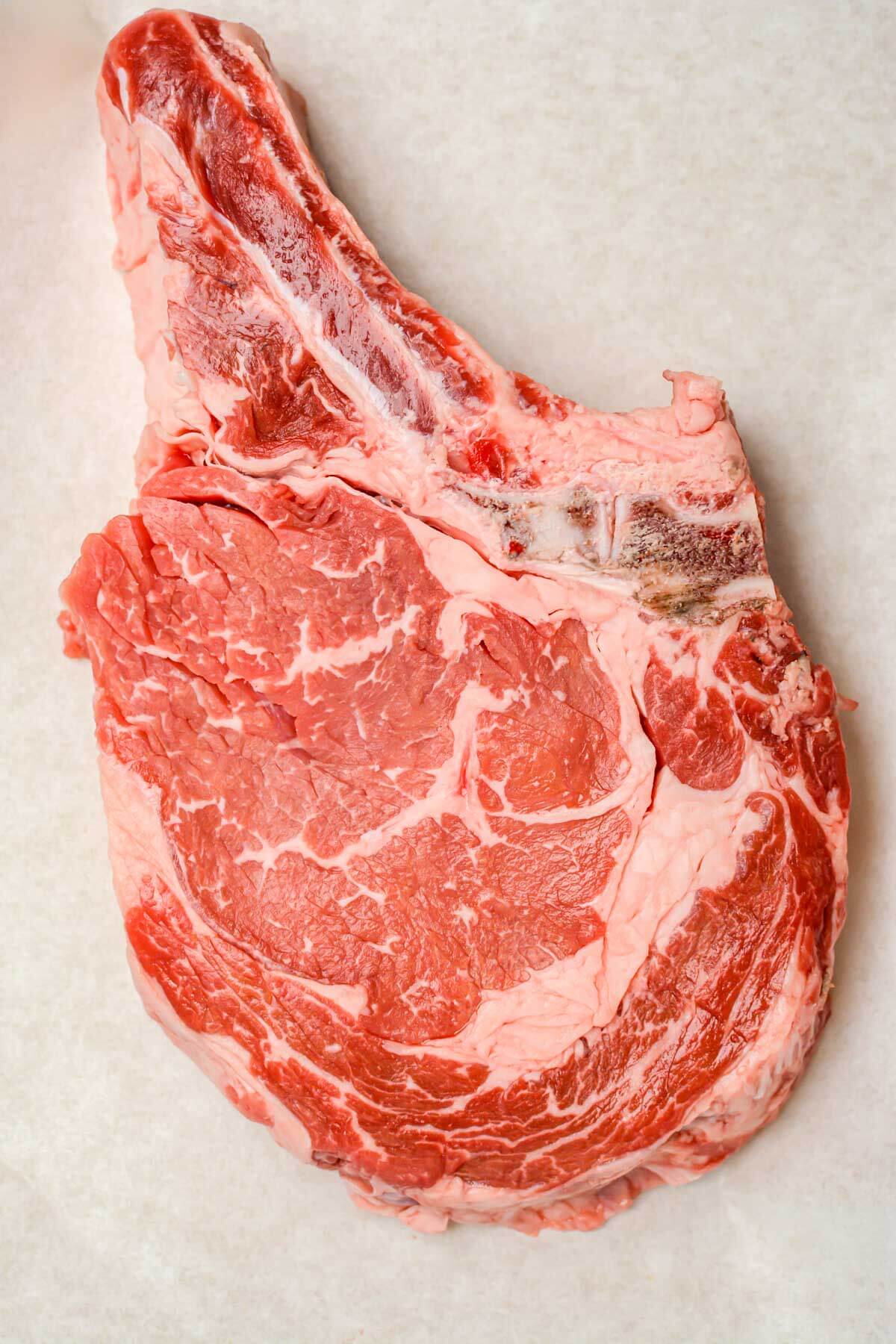
Ribeye steaks, also known as Delmonico steaks, are taken from the primal rib of the cow, on the back near the spine. This is the same are where the prime rib roast comes from.
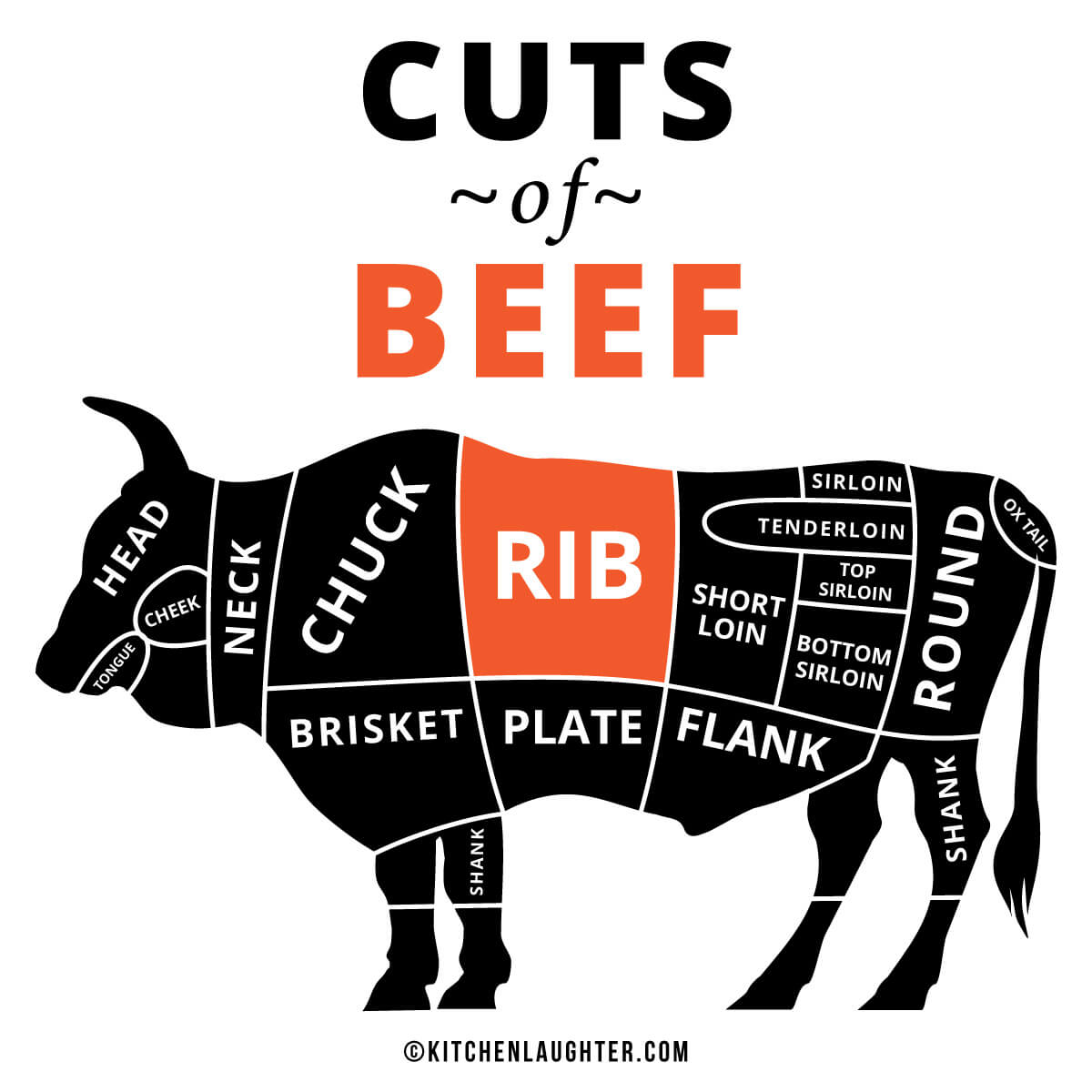
West coasters call the ribeye a Spencer steak. Butchers also refer to them as beauty steaks or market steaks. Don’t be confused when people say that the scotch fillet is the same as a ribeye. It is the same cut, the difference is that the ribeye has the bone and the scotch fillet doesn’t.
They are comprised of three major muscle sections, the complexus, spinalis, and longissimus dorsi muscles. In fact, one of my favorite recipes uses just the spinalis, or ribeye cap steak.
Ribeyes may be boneless or bone-in, with the rib still attached. They are cuts of meat removed from the center of the prime rib. Arguably, these are the best steaks money can buy.
Ribeye has a strong, big-beef flavor and is a tender, juicy meat. The steaks can be anywhere from ½” to 2″ in thickness and range in size from 8 ounces to 20 ounces.
These also have high-fat content thanks to the gorgeous marbling. So many of us compare the Porterhouse vs Ribeye when looking at which one is our favorite to pop on the grill.
Flavor & Texture
Filet mignon is considered the most tender beef cut. This is the smaller end of the tenderloin: very lean but also not a worked muscle, which is why it has the melt-in-your mouth texture when properly cooked.
Because it lacks fat marbling, filet has a mild flavor, making it a favorite for those who don’t like the intense beefy flavor of most steak cuts.
The second contender, ribeye, boasts more fat marbling and a chewier texture. As the marbling renders during cooking, it adds a complex flavor profile to the steak while keeping it juicy.
When it comes to savoring steak, the flavor and texture are paramount. Filet mignon and ribeye offer distinctly different experiences in both aspects.
Fat Content & Marbling
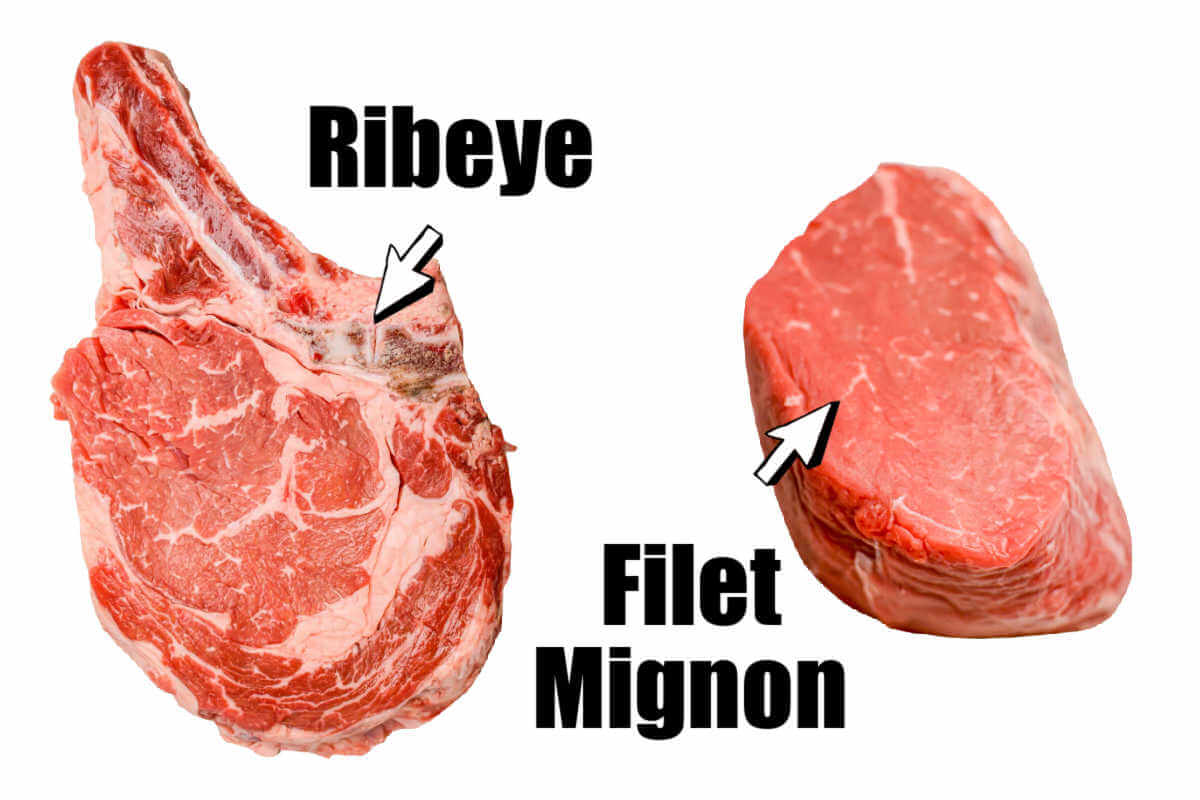
The fat content and marbling of a steak significantly influence its flavor, texture, and overall cooking behavior. Filet mignon and ribeye, are both highly appreciated cuts, but very different in these two aspects.
Filet is known for its minimal fat content. It’s certainly a healthier option as it is low in saturated fat but this also means its flavor and juiciness depend more on the quality of the meat and whether it is cooked properly or not.
It’s a wonderful cut to serve with balanced sauces and seasonings that allow the natural taste of the filet to shine through.
In contrast, the ribeye is a favorite among steak lovers for its generous marbling and higher fat content. The beefy flavor is much more intense for the ribeye, and it also has a slight chew factor compared to the filet.
As a bonus, the higher fat content of ribeye also makes this cut more forgiving during cooking as it is less prone to drying out.
Nutrition
| Nutrient | Filet Mignon (Raw, 1 oz.) | Ribeye (Raw, 1 oz.) |
|---|---|---|
| Calories | 42 Cal | 83 Cal |
| Protein | 6.2g | 6.8g |
| Total Fat | 1.9g | 6.2g |
| Carbohydrates | 0g | 0g |
| Fiber | 0g | 0g |
| Potassium | 80.8mg | 86.5mg |
| Sodium | 12.5mg | 15.9mg |
| Cholesterol | 17.3mg | 19.3mg |
Not surprisingly, the leaner filet mignon is also the lower-calorie option when compared to ribeye. If you are trying to cut back on fats, it’s certainly one of the healthiest steaks you can have.
The juicy ribeye with its high fat content will keep hunger at bay for longer. It also has a slightly higher protein content. Despite the rich marbling, the cholesterol is only marginally higher compared to filet.
If you’re looking for a more indulgent experience, the ribeye is the winner. Nevertheless, the much leaner filet will always be praised for its buttery texture. If fat and cholesterol happen to be among your dietary concerns, the prize goes to filet mignon.
🍳How to Cook
The unique flavors and textures of filet mignon and ribeye require different approaches when cooking these cuts. It’s certainly not difficult to cook them to perfection, and here are the best methods to use.
Filet Mignon
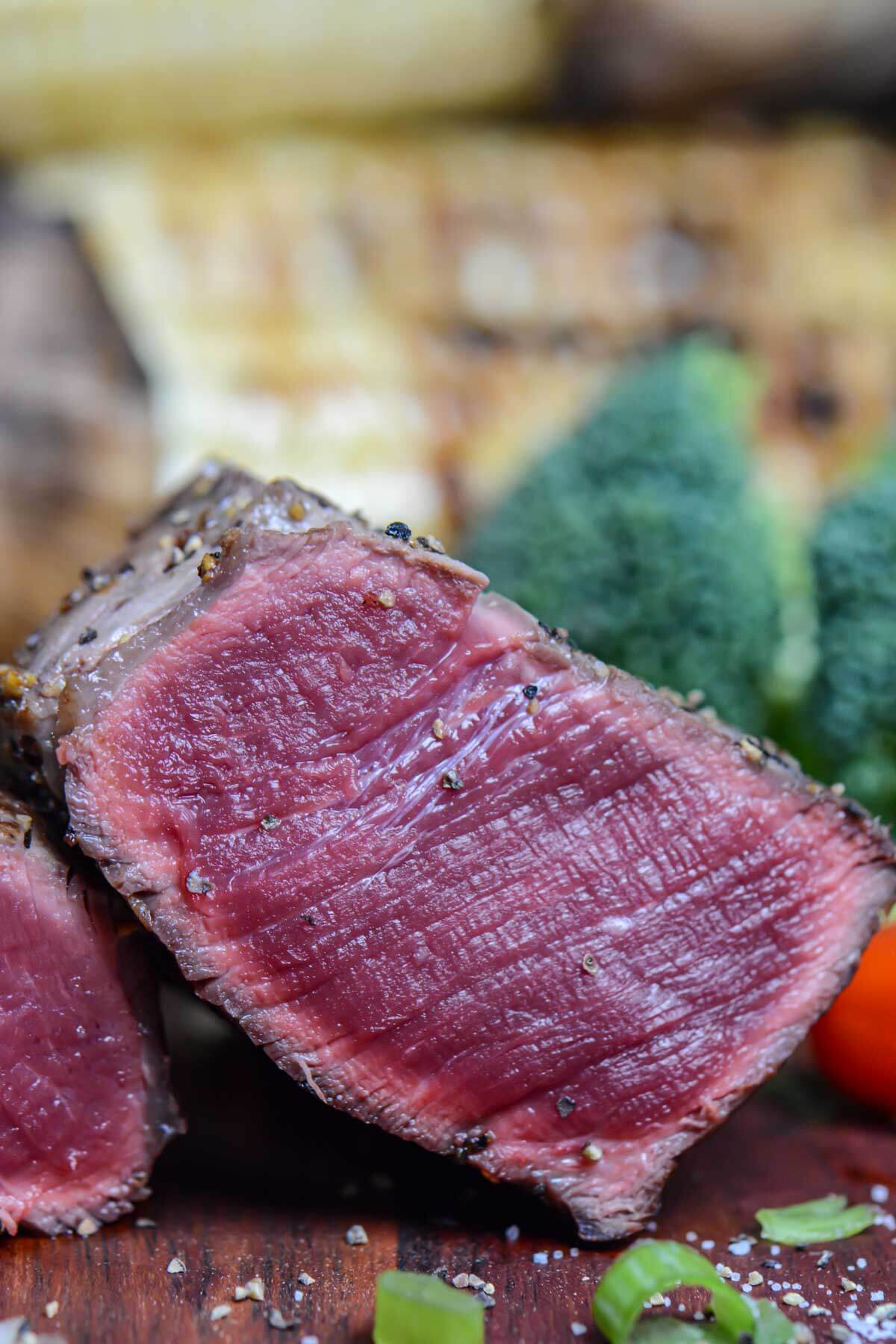
🍳Pan-Searing | Heat a skillet over medium-high heat (around 400°F). Sear the filet mignon for 2-3 minutes per side. For medium-rare, aim for an internal temperature of 130-135°F, and for medium, 135-145°F. Add butter or oil for richness.
🥩Blue Steak Method | As described in our what is a blue steak post, cook the steak over high heat (about 450-500°F) for just 1 minute per side. The internal temperature should be around 115-120°F, leaving the center cool and red.
♨️Grilling | Preheat the grill to medium (around 350-375°F). Grill the steak to your preferred doneness, following the internal temperature guide above.
⏲Oven Finish | After searing, place the steak in a preheated oven at 375°F until it reaches the desired internal temperature.
Ribeye
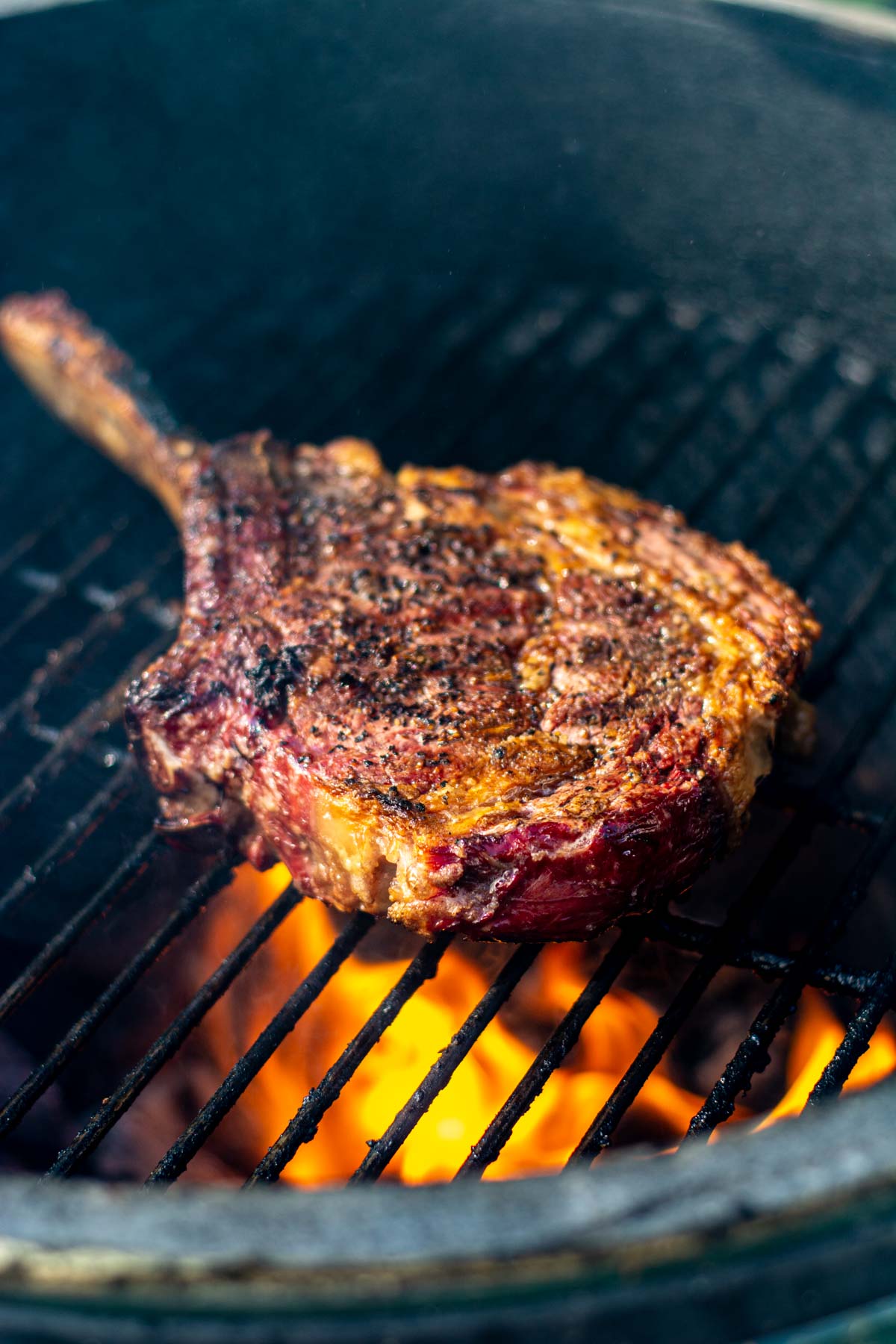
♨️Grilling | Preheat your grill to high (around 425-450°F). Grill the ribeye according to our grilled ribeye steak recipe, aiming for an internal temperature of 130-135°F for medium-rare or 135-145°F for medium.
🧑🍳Reverse Searing | Start with the grill set at a low 250°F, as shown in our guide on how to grill a reverse sear Cowboy ribeye. Cook until the internal temperature is about 10°F below your target temperature. Then sear over high heat (350-400°F) for a perfect crust.
🔥Smoking | Set your smoker to 225-250°F as in our smoked ribeye steak recipe. Smoke the steak until it reaches the desired internal temperature for your preferred level of doneness.
🍳Pan-Searing | Use a cast-iron skillet over medium-high heat. Sear each side for 3-4 minutes for medium-rare or longer for higher doneness levels.
Doneness Temperature Guide
- Rare: 120-125°F (cool red center)
- Medium-Rare: 130-135°F (warm red center)
- Medium: 135-145°F (warm pink center)
- Medium-well: 145-155°F (slightly pink center)
- Well-done: 160°F and above (little or no pink)
📌Additional Tips
✔️Resting Time | Let your steaks rest for about 5 minutes after cooking to allow juices to redistribute.
✔️Seasoning | Ribeye does not need much seasoning. Salt and pepper or a simple rub of garlic, salt, and pepper are all that is needed. It has intense flavor of its own and you don’t want to overpower it.
Season filet mignon with salt, pepper, and any combination of herbs or flavors. You can use lemon pepper, rosemary, or thyme just to name a few. You can also use your favorite steak seasoning.
✔️Temperature Monitoring | Use a reliable digital meat thermometer to check for doneness, especially for thicker cuts.
✔️Oil The Filet | Rubbing the filet with olive oil or vegetable oil will help make up for the lack of fat in the meat. Finish it with butter for a decadent flavor.
✔️Do Not Overcook Filet | The lack of fat will cause this meat to dry out very quickly. It should be served medium-rare to medium.
If you choose to marinate it, don’t leave it in the soak for very long. It will develop an unpleasant texture.
Best Finish
Depending on the fat-to-meat ratio, marbling, and natural tenderness, each type of steak has an optimal doneness level that will bring out its best qualities.
Filet Mignon
The lean and tender filet mignon is the best at a medium-rare doneness. An internal temperature of 130-135°F ensures that the steak remains tender and juicy.
If you like your steak a little less pink, you can cook it up to medium (135-145°F). Your filet will have a slightly firmer texture but most of the steak’s natural juiciness will still be retained.
Ribeye
The robust, beefy flavor and rich marbling of ribeye steaks make them perfect when cooked to a medium finish (135-145°F internal temperature).
Why is this the best finish for ribeye, you might wonder? This level of doneness allows the fat within the steak to render properly, infusing the meat with flavor and creating a tender, succulent texture.
For those who prefer their ribeye a little pinker and juicier, medium-rare doneness 135-145°F is also a good choice.
Uses
The price, size, cooking methods, and availability of filet and ribeye lend these cuts to different preparations and dishes. Let’s dive into the best culinary uses for these two steaks, for a superb cooking and dining experience!
Filet Mignon
⭐Elegant Dining | A rare and pricy cut like the filet mignon can be the star of a gourmet meal. The amazing texture and subtle flavor make it perfect for dishes where the steak is the main focus.
⭐Special Occasions | The luxurious mouthfeel filet offers makes it ideal for special occasions. Don’t be afraid to balance the leanness of this meat with a rich sauce béarnaise or a red wine reduction.
⭐Health-Conscious Meals | If you are on a low-fat diet, filet mignon is one of the best lean meat options, making it suitable for lighter meals. Pair it with a fresh salad or steamed veggies, it will provide well-rounded nutrition while cutting back on calories.
⭐Small Portions | Filet mignon is usually served in smaller portions. It’s a good choice for a more diverse menu that includes additional main and side dishes.
Ribeye
⭐Casual Grilling | Ribeye has always been a highly appreciated beef cut, especially for BBQ cookouts and casual grilling. The stronger beef flavor pairs well with the smoky char and bold seasonings.
⭐Comfort Food | The rich texture of ribeye is very suitable to various comfort dishes such as steak sandwiches, steak fajitas, or hearty steak salads.
⭐Feeding A Crowd | Ribeye might be a premium cut of beef, but the price per pound is more affordable compared to filet. Also, ribeye steaks are larger and more forgiving to cook than the filet, making them a good choice for family dinners and large gatherings.
⭐Versatile Cooking | You can experiment with different cooking techniques for your ribeye steaks such as grilling, pan-searing, reverse-searing, broiling, and smoking.
The rich texture of ribeye lends itself well to comfort food dishes. It’s excellent in steak sandwiches, steak fajitas, or even as the main protein in a hearty steak salad.
Price
The differences in fat content, flavor, and texture should not be ignored for ribeye and filet, although the price is also an important factor.
Filet mignon is one of the most expensive cuts of beef for several reasons. Since it is a smaller cut from the tenderloin, you get a small quantity of filet from each cow.
It’s not just scarce, it’s also in high demand, especially in fine dining locations. Also, let’s not forget that the filet is a very lean cut, with minimal fat and connective tissue so nothing goes to waste. Yet another factor contributing to its high price.
On the other side of the ring, the ribeye is also a premium cut but generally less expensive than the filet. The ribeye steaks are usually larger than filet mignon so you get more meat per cut.
When deciding between filet mignon vs ribeye, budget considerations need to be taken into account, not just personal preferences and the occasion.
The ribeye has a lower price per pound compared to filet, although both are considered premium cuts. Also, keep in mind the prices vary a lot based on the source and quality of the meat. Make sure to consider choice vs prime when deciding which is the best beef grade for you.
Availability
👉As you might already suspect, filet mignon is the less abundant cut of the two. It is typically available in high-end supermarkets, specialty butcher shops, farmer’s markets, and gourmet food stores.
The higher price point and lesser demand compared to more common cuts make filet harder to find in standard grocery stores.
If you are having trouble finding filet steaks in your area, consider online meat retailers. Many of them provide a range of options regarding quality (such as organic, or grass-fed), and preparation (such as aged or marinated).
👉Ribeye steaks are easier to find than filet mignon. You can purchase them in most supermarkets, grocery stores, and butcher shops. When it comes to everyday cooking, the ribeye is the more accessible cut.
Nevertheless, this is still a premium cut, and online retailers and specialty shops can provide a broader range of choices in terms of quality, source, and preparation, just as they do for filet.
☯Pros & Cons
Still on the fence about which of these two cuts should be your next meal? Let’s take a look at their pros and cons.
| Filet Mignon | Ribeye | |
|---|---|---|
| Pros | Most tender cut of beef Low in fat, healthier option Mild flavor, versatile for sauces Perfect for fine dining and special occasions | Rich marbling enhances flavor Juicy and flavorful Forgiving during cooking, less prone to drying out Great for grilling and BBQ |
| Cons | More expensive per pound Can be less flavorful due to low fat Requires careful cooking to avoid drying Less available than other cuts. | Higher in fat and calories Can be too rich for some palates Not as tender as filet mignon |
🍽️Serving Suggestions
Wondering what to serve with filet mignon or ribeye? You have a lot of freedom of choice, but it is a good idea to match the richness of the steak with your side dishes.
I recommend lighter sides for the milder-flavored filet mignon, and richer sides for the more intense ribeye steak.
Filet Mignon
⭐BBQ Sides | Complement the lean filet mignon with simple BBQ sides like grilled corn in the husk or grilled sweet onions, adding a touch of smoky sweetness.
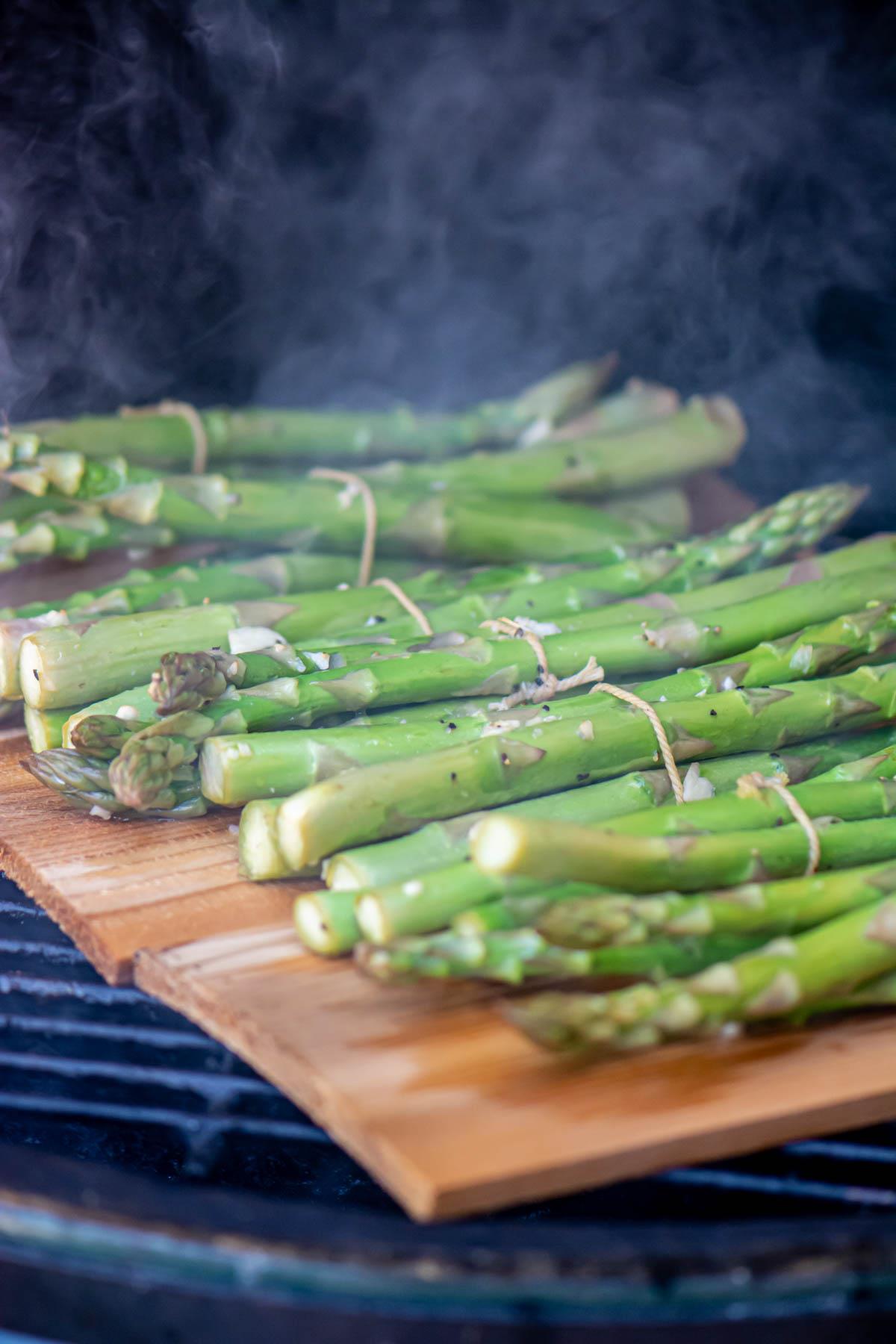
⭐Vegetables | Light vegetable sides such as smoked asparagus bundles, grilled broccolini, or roasted Mediterranean vegetables enhance the delicate flavor of filet mignon.
⭐Potatoes | For a classic pairing, try grilled baby potatoes with garlic or grilled sweet potato wedges with your filet mignon.
⭐Light Salads | A fresh creamy cucumber salad or a light mixed salad like my grilled peach and arugula salad can add a refreshing contrast to the meal.
Ribeye
⭐Hearty BBQ Sides | Ribeye’s rich flavor goes well with heartier sides like smoked mac and cheese (go for the grilled version if you’re in a rush!) or this amazing bourbon barrel smoked cranberry sauce.
⭐Grilled Vegetables | Pair the ribeye with grilled roasted root vegetables or grilled beer corn on the cob for a balanced meal.
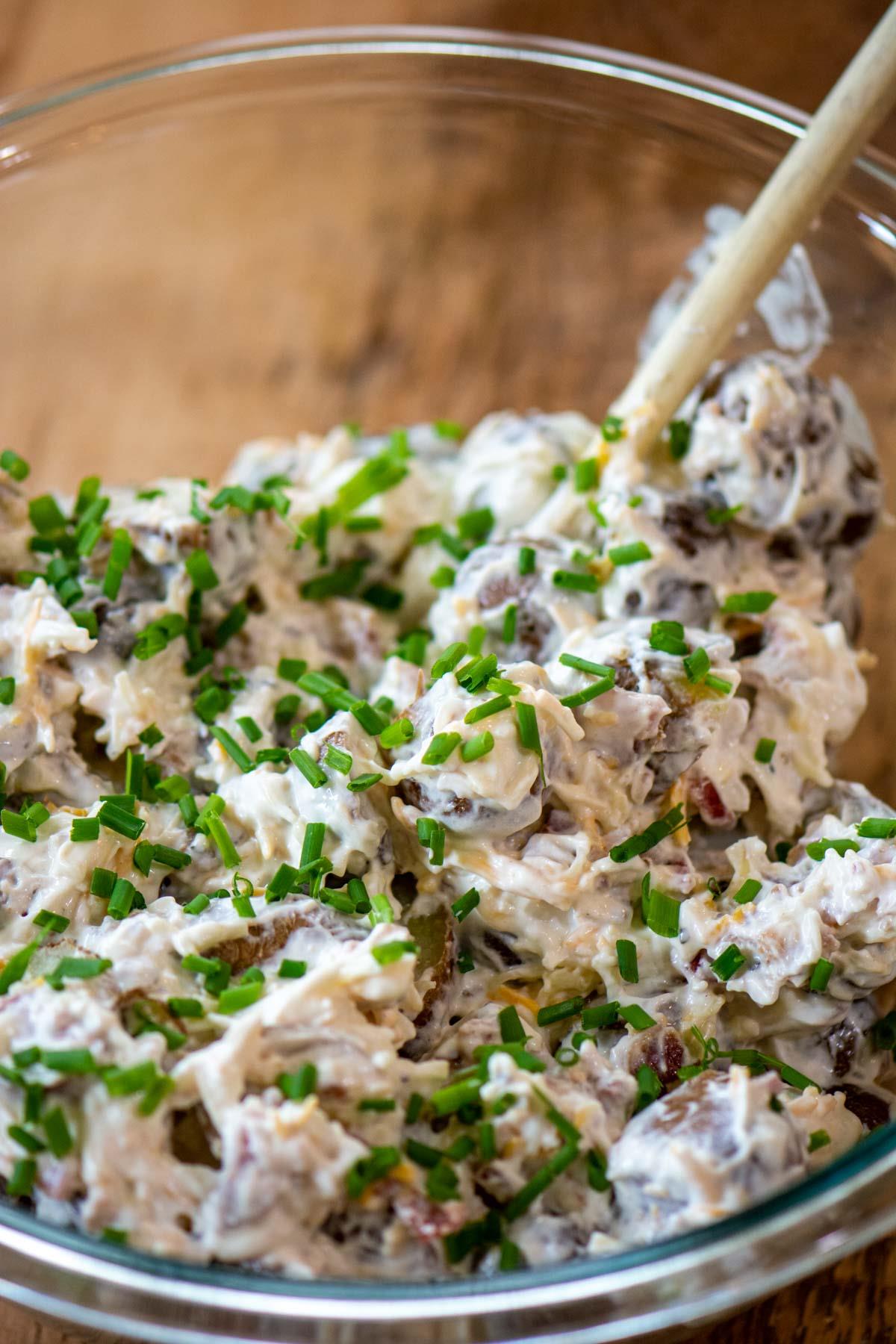
⭐Potato Dishes | Indulge in a smoked potato salad, smoked baked potatoes or grilled sweet potatoes in foil alongside your ribeye steak.
⭐Robust Salads | An easy pasta salad, a classic Caesar salad, a Caprese salad with avocado, or another hearty salad can complement the bold flavors of ribeye.
🍱How to Store Leftovers
Fridge | The shelf life of refrigerated cooked steak is 3-5 days if properly stored.
Any time I have leftover steak, I like to cut it into cubes or slices, keep it in an airtight container in the fridge, and make steak and eggs for breakfast.
It also works well for sandwiches, salads, pasta dishes, tacos, or soups.
If you can’t fit the leftovers into your schedule, transfer them to the freezer where they will keep for up to 3 months.
Freezer | To freeze, place the leftover steak in a vacuum-sealed freezer bag or wrap it in a layer of plastic wrap followed by another layer of aluminum foil and place it in a heavy-duty freezer bag. This will protect the leftovers from freezer burns and flavor loss.
Tip: Not sure if your leftover steak is still safe to eat? Read our guide on how to tell if a steak is bad.
🐮What Part of the Cow is Filet Mignon?
Filet Mignon is cut from the short loin area of the beef tenderloin, also known as the psoas muscle, which runs down the length of the spine. Usually, this is cut out of the cow as a long, thin cut, called the tenderloin.
You’ll find this most often cut into steaks and labeled filet mignon.
❓FAQ
It depends. Which do you value more – tender, melt-in-your-mouth buttery meat of a filet or slightly less tender, but highly flavorful meat in a ribeye? Cost and availability may also be considered, with ribeye being more affordable and easier to find than filet mignon.
Yes. Pound-for-pound the Filet will cost more. However, you can possibly serve your guests less Filet Mignon since each steak is about 8 ounces already cut. Ribeye steaks are often cut in 10-12 ounce portions.
No. It is probably the most tender cut of steak available but the flavor is lacking and it is super easy to dry out when cooking. It must be served medium-rare to rare and can be a bit finicky.
Technically, the Filet Mignon is a leaner cut of meat resulting in healthier meat with less fat, less cholesterol, and fewer calories. Ribeye has a higher fat content, more cholesterol and more calories per pound. Both of these beef cuts are excellent sources of protein, iron, and other vitamins and minerals.
No. They look similar but are not the same. Eye fillet is an oddly-shaped cut that spans between the short loin and the sirloin. It may also be called beef tenderloin. The eye fillet is close in location to the Filet Mignon, and is very tender. It is, however, not the same exact cut of meat.
Both are premium beef cuts, but they differ significantly, in terms of texture, flavor, and where they are cut from on the cow.
The ribeye, from the cow’s rib section, is known for its rich marbling and robust flavor. This fat content makes it juicy and ideal for grilling or pan-searing. In contrast, the tenderloin, is from the loin area and is the most tender part of the cow. It has less fat, resulting in a milder flavor and buttery texture.
While ribeye offers a hearty beef taste, tenderloin is prized for its delicate texture, often served in fine dining settings.
More Steak Recipes and Comparisons
How to Tell if Steak Has Gone Bad
Related Recipes


Ginny Collins is a passionate foodie and recipe creator of Savor and Savvy and Kitchenlaughter. Indoors she focuses on easy, quick recipes for busy families and kitchen basics. Outdoors, she focuses on backyard grilling and smoking to bring family and friends together. She is a lifelong learner who is always taking cooking classes on her travels overseas and stateside. Her work has been featured on MSN, Parade, Fox News, Yahoo, Cosmopolitan, Elle, and many local news outlets. She lives in Florida where you will find her outside on the water in her kayak, riding her bike on trails, and planning her next overseas adventure.
Leave a Reply